Archive Record
Images
Additional Images [11]
Metadata
Object Name |
Typescript |
Object ID |
26.01 |
Search Terms |
interview recollections oral history transcripts |
Collection |
Ina Watson Oral History Collection |
Date |
02/25/1982 |
Scope & Content |
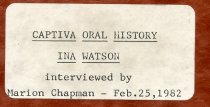
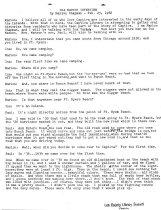
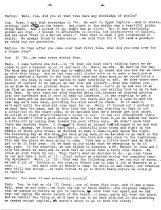
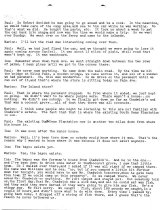
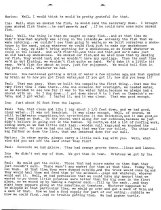
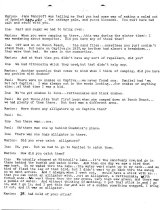
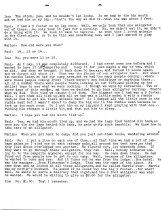
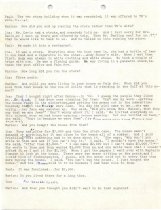
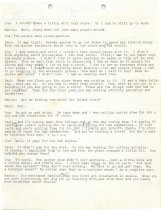
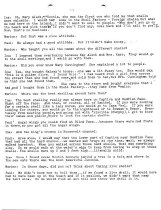
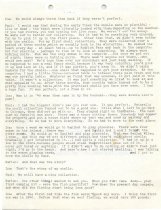
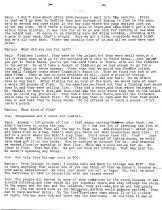
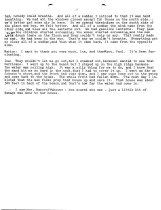
Transcripts from the oral history interview of Ina Watson, by Marion Chapman. Page 1 of 16; Ina's maiden name is Ina Varble; her son, Paul, will be joining them in the interview; Ina first came to Florida to go camping, but the no-see-ums were so bad that they went to Bunch Beach (also known as nigger beach because only white people were allowed on the beach); this beach was on an island directly across from the point of Fort Myers Beach that was washed out in the 1926 hurricane; Ina first came to Captiva in 1934; she came in Sanibel in 1930 and picked up all sorts of Fighting Conchs and Lacy Murexes, but refused to pick up junonias because she thought they were ugly. Page 2 of 16; Ina did not know anything about shells until 1940; she went to Upper Captiva and there was not a single shell on the beach except a beautiful golden olive, which she showed to the postmistress; the postmistress proclaimed that it was worth $25, and Ina became very interested in shells since she was always trying to earn money; Ina first came for an extended stay on Captiva in 1935 and came down every winter following; Paul came down to Captiva by accident in 1934 when he was sailing with friends; they landed on Captiva because the wind was dying down and they wanted a place to stay the night; they were dedicated to return the following year, and did so after many troubles. Page 3 of 16; Paul and his friends and just rebuilt a car, and thought they would lose it on Sanibel on their undermaintained shell road; when they came to Blind Pass and Captiva, they had pavement and they rejoiced; the pavement ended at the Island Store, and they continued on to Chadwick's, and all that they saw was lots and lots of coconut groves; the existing South Seas Plantation is two miles down from where Chawick's house was. Page 4 of 16; Ina gave leftover fish to Mr. Chadwick in exchange for them camping on his property (although they never actually saw each other); Mr. Chadwick was a sick man who could only eat fish; Paul and his friends built a smokehouse out of various items so that their fish could last longer; in order to get fresh water, they dug down to the water table and the water tasted clean (they boiled it anyway); Paul ate cocunuts, oranges, limes, and lemons from the Island; Ina, however, always got sacks of potatoes from in town; Paul also found rabbits, culls, and gopher turtles to eat on the Island. Page 5 of 19; Ina had to bring salt and sugar to the island from the mainland; the mosquitoes were off and on, but in 1937 they were extremely bad; the only repellant that they had was Citronella, which was useless; there were no snakes on Captiva, although there were some on Sanibel; there was one alligator on Captiva, behind Chadwick's place; they caught alligators by drawing them out of the water using a stick on Sanibel. Page 6 of 16; Paul caught a 9 foot alligator when he was 15 or 16; he only caught it to have it in the campsite for two days, and then he and his friends released it again into the wild; they used alligators as a form of protection for their campsite; a man named Harris once came down to their campsite to buy their nine-foot alligator for $1. Page 7 of 16; Paul and his friends questioned the man on how to eat the alligator, so they caught another one; Paul felt bad for the alliagator, so he tried to take all of the pieces of wood out of his mouth, the alligator slowly clamped down on his one hand, and then had a grip on both of them; Paul's friend had to use a hatchet to pry the alligator's mouth open; they skinned the alligator and ate it; Ina once used an ibis for meat because she wanted to have a bird like a turkey to eat on Thanksgiving. Page 8 of 16; their campsite consisted of about 5 pots for cooking; they often had two meals a day; most mornings they would make a potato cake, and for lunch they would make grapefruit fritters (!) or fish fritters; grapefruit fritters are made by dunking the grapefruit in pancake batter and fry it in deep fat; they stopped camping on Captiva after 1941 - Roosevelt made a speech that he would draft every women up to 50 years, so they packed up and moved to Iona and built a house. Page 9 of 16; they bought their house from Mr. Halsey; Mr. Halsey visited them in their campsite every night, and eventually he led them to his house when it started raining; they did not know that there was a building on the island because they had never gone in the direction of the post office (their fishing and hunting grounds were in the direction of Chadwick's); they had five campsites on the island, and their new house that they bought from Mr. Halsey was about one mile south of Chadwick's manor house. Page 10 of 16; their first campsite had been turned into a lime grove the second year that they had returned; every year following that, someone had purchased the land that they had cleared for camping, so they were forced to move farther south every year; they stayed in the Tree House for 5 years (purchased in 1948) and built a new house on Palm Ave. in 1953; Ina ran the Island Store from 1946 to 1949; Signe Wightman had cottages were the Mucky Duck is, but they could not be rented unless you took dinner there. Page 11 of 16; Andy Rosse lived in a palmetto shack, between the Post Office and Palm Ave. Page 12 of 16; when Ina first ran the Island Store, it was completely empty, and she was selling the items for a ridiculously low price; Paul changed this when he came to Captiva and had been paying five times as much for the same product; Ina also owned a restaurant for dinner, but was not allowed to buy a stove! Page 13 of 16; Ina learned the names of all sorts of shells from Mary Aleck and Mrs. Karr (she tagged along to their shell meetings); the best shelling was on Captiva and Redish Pass; there were also specific places you could go if you wanted a specific type of shell (i.e. Lacy Murex - Casa Ybel); the did not take live shells only because they did not know how to boil them. Page 14 of 16; in the early times, the shells were so plentiful that one would only look for perfect shells; the only shells that Paul or his friends would pick up would be unique or interesting shells; they would place them on a table, and by the end of their three-month winter stay, the table would be loaded with perfect shells; Ina went with Beulah Wiles to games of pinochle on Sanibel, and she learned about shells through meeting other people; the fishing started being less good after the first red tide in 1946; before that, they would easily pull in 100 pounds. Page 15 of 16; they waited only three minutes to see if there was a bite of fish; if there wasn't, they would go look for rabbit instead; they used cane poles for fishing, and fiddlers (crabs) for bait; they sold their sheepshead to Mr. Randall for 2 1/2 cents per pound, and their redfish for 8 cents; they had an account with Mr. Randall, who ran a grocery store on Randall's dock, so they never had to pay for food (i.e. a running tab); the trip from Chicago and back was $70; all of the men, women, and children on the island stayed in the Island Store during the 1946 hurricane because it was a solid building. Page 16 of 16; Ina snuck out during the hurricane to take a look; it became very hard to breathe during the hurriance becuase all of the windows were closed; when she opened the windows, it became much more comfortable; a gust of wind came through and blew out all of the gasoline lanterns, which made Ina mad. |
People |
Chadwick, Clarence B. Chapman, Marion Halsey Karr, Susan Randall, Mr. Watson, Ina Watson, Paul Wightman, Signe Wiles, Beulah Brainerd |